
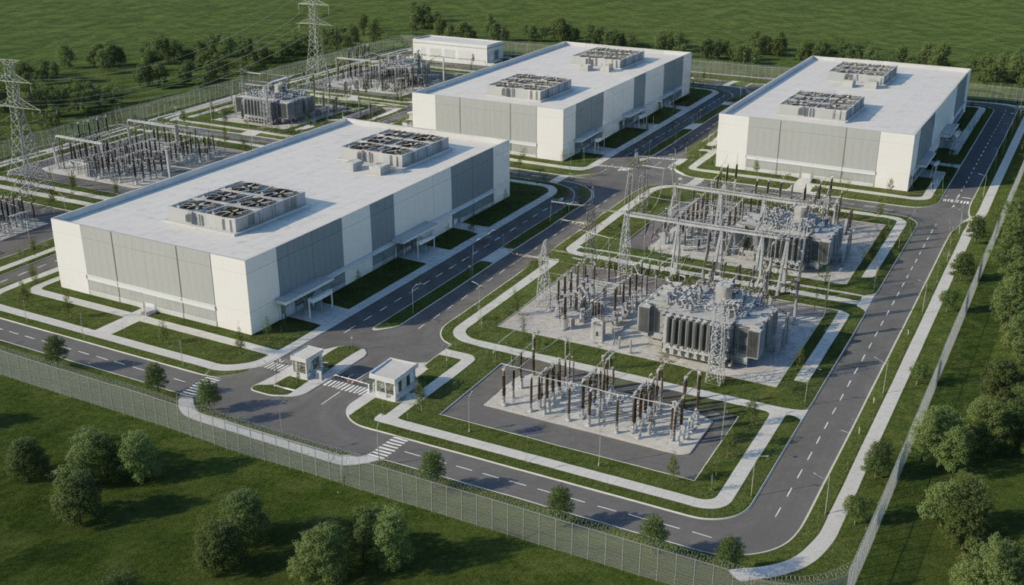
The placement of these data centers raises obvious questions. Given their monumental water consumption, how can summer water restrictions be justified? With their massive power usage, how can the government pursue climate narratives and mandate electric vehicle adoption?
Even the UN and EU have retracted their climate projections and targets, yet Canada continues to aggressively pursue carbon reduction policies, including the forced phase-out of gas-powered vehicles.
Considering the computing power of a modern smartphone, why do they need thousands of data centers—some covering tens of thousands of acres—on land usually zoned for agriculture? We aren’t being told the truth about what kind of data they are processing. The massive expansion of FLOCK cameras and other surveillance is a cause for concern regarding our civil liberties.
Can Canada’s existing electrical infrastructure support both a transition to electric transportation and the enormous power demands of a growing data center industry? The grid is already under strain. Simultaneously adding millions of electric vehicles and energy-intensive data centers could place unprecedented demands on the system. It remains unclear if generating capacity and grid upgrades can be completed in time.
The total lack of public inquiry for such large projects is alarming. Governments traditionally sought public input on major infrastructure like highways and stadiums, yet there has been no public consensus on this matter. The government is being very sneaky about it.
The main issues are the lack of awareness on what kind of data these centers are processing, electricity consumption, water usage, noise pollution, and heat generation. Modern data centers require vast amounts of energy for servers and cooling systems. Local residents near existing facilities report persistent noise from cooling equipment and backup systems.
Heat generation is another concern. Ecosystems are sensitive to temperature changes as well as the loss of water, and the concentrated heat produced by these facilities deserves closer examination as they increase in size and number.
This debate is no longer just about technology. It is about balancing economic growth, infrastructure realities, environmental stewardship, and democratic accountability.
